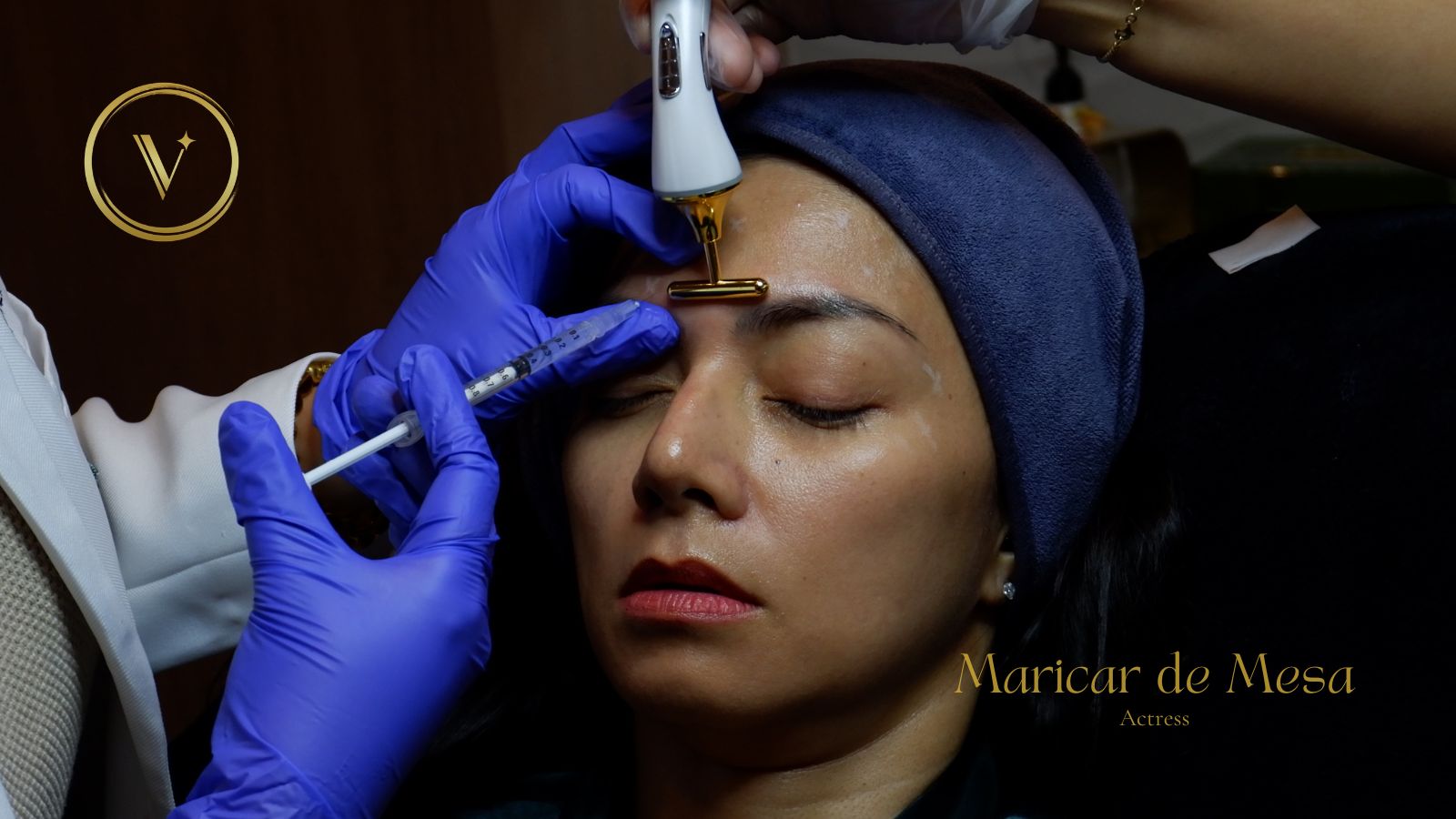
To my friends who have been told these two are “basically the same.” Botox vs Xeomin in the Philippines is the most common comparison patients bring up at the consult, and the most common one that gets answered in a sentence and a shrug. They are not the same. They share an active molecule, but the formulation, the storage, the regulatory history, the price, and the long-term immunological behavior are different in ways that should affect which one you pick.
Here is what Botox vs Xeomin in the Philippines actually looks like at the molecular level, what that means in your face, how I decide between them in clinic, and what to watch for in a market where counterfeit toxin is a real problem.
What Botox and Xeomin actually are
Both are purified botulinum toxin type A. The toxin is produced by the bacterium Clostridium botulinum, then purified, standardized, and freeze-dried into a clinical product. Once reconstituted with saline and injected into a muscle, it blocks the release of acetylcholine at the neuromuscular junction. The muscle cannot receive the signal to contract. The wrinkle that the muscle was creating softens.
The mechanism is the same. The molecule that does the work is the same protein, a 150 kilodalton neurotoxin. What is different is what surrounds it.
Botox is onabotulinumtoxinA, manufactured by Allergan (now AbbVie). The 150 kilodalton active toxin comes packaged inside a 900 kilodalton complex of accessory proteins called neurotoxin-associated proteins, or NAPs. These NAPs serve no function once the toxin is injected. They dissociate quickly in tissue.
Xeomin is incobotulinumtoxinA, manufactured by Merz. The accessory proteins have been removed during purification. What you receive is the 150 kilodalton active toxin and nothing else. The marketing language calls it “naked” toxin.
The mechanism in your muscle is identical. The clinical effect, dose for dose, is essentially equivalent. The differences live in immunology, storage, and price.
Why the accessory proteins matter
The accessory proteins in Botox do not change the immediate effect, but they may affect how your immune system sees the product over years of repeat injection. The theoretical concern is that NAPs are foreign protein. With enough exposure over enough years, a small subset of patients can develop neutralizing antibodies that reduce the toxin’s effect on future injections. This is well documented in high-dose, frequent-injection populations such as patients treated for cervical dystonia or chronic migraine.
For cosmetic patients receiving small doses every three to four months, the absolute risk of clinically meaningful antibody formation is low, but it is not zero. Xeomin’s “naked” formulation was developed specifically to reduce that long-term immunological signal.
In practice this matters most for three groups: patients in their twenties or thirties who plan on a lifetime of preventive neurotoxin use, patients receiving high-dose treatment of the masseter for TMJ or jaw slimming every three to four months, and patients who have noticed their results becoming shorter or weaker over years of Botox.

Onset, peak, and duration
The published and clinical experience is essentially overlapping.
Onset. Both products begin working within three to five days. Some studies and many patients report Xeomin showing earlier softening, sometimes within twenty-four to forty-eight hours. The difference is small and not consistently reproduced in trials.
Peak effect. Both reach maximum effect at roughly two weeks. This is when we book the follow-up and decide whether a touch-up is needed.
Duration. Both last roughly three to four months for facial cosmetic use. Duration varies more by patient metabolism, dose, treatment area, and how active the muscle is than by which brand was used. Patients who exercise heavily, run high body temperatures, or have very active muscles tend to metabolize neurotoxin faster regardless of brand.
For dose-equivalence purposes, we treat one unit of Botox and one unit of Xeomin as clinically interchangeable in cosmetic doses. The labeling allows this. The peer-reviewed literature supports it.
The cost of Botox vs Xeomin in the Philippines
This is where the comparison gets concrete for most patients.
Pricing for Botox vs Xeomin in the Philippines is per unit, not per syringe. The brand pricing differs. Xeomin typically prices a few pesos lower per unit than Botox at most reputable Manila clinics. Across a typical glabellar treatment of twenty to twenty-five units, the difference is meaningful but not dramatic. Across a masseter treatment of fifty to sixty units per side, the difference becomes large enough to influence the choice.
The right number to compare is not the per-unit price but the cost per session multiplied by the number of sessions per year. At VMA we walk patients through this on the consult so the comparison is honest rather than abstract.
A more important price warning: if a clinic or salon is offering neurotoxin treatment at a price that seems impossibly low, the product is likely not authentic Botox or Xeomin. I will come back to this in the honest section.
Where I actually use each one
When patients ask me about Botox vs Xeomin in the Philippines, the question they are usually really asking is which one is right for the specific work their face needs. Here is how that decision actually plays out by treatment area.
Glabella (the “11s” between the brows), forehead, and crow’s feet. Either product works. For new patients who are anxious and brand-aware, Botox is often the gentler introduction because the name is familiar. For patients planning long-term preventive use, I often steer toward Xeomin.
Masseter for jaw slimming and TMJ. Higher doses, repeated every three to four months over years. This is where I lean Xeomin more strongly, because the cumulative antibody exposure matters more in this population.
Brow lift, lip flip, gummy smile. Either. Choice usually follows patient preference and what we have on hand.
Neck bands (platysma) and chin dimpling. Either. We discuss based on dose and history.
First-time neurotoxin patient who is nervous. I typically recommend Botox. The brand recognition is a real therapeutic asset.
Patient who reports diminishing duration on Botox over years. I often switch them to Xeomin to check whether subclinical antibodies are part of the picture.
How a session at VMA actually runs
A neurotoxin consultation includes facial assessment at rest and in animation, a discussion of which lines are dynamic (caused by movement) versus static (etched in), and a frank conversation about realistic outcomes. We map injection points before the patient sits in the chair. We use ice and topical anesthetic. The actual injections take five to ten minutes. The follow-up is at two weeks.
Bruising can happen. Heaviness in the brow can happen if too much product reaches the wrong muscle, which is why we map carefully. Asymmetry can happen and is correctable at the two-week follow-up. We do not freelance.
How Botox and Xeomin fit with the rest of our protocols
Neurotoxin is a movement tool. It does not improve skin texture, pigment, or structural laxity. For texture and pigment we use surface treatments, including our Hollywood Spectra and chemical peel options. For dermal regeneration and collagen building, we use PDRN and exosome facials. For deeper structural lifting in the SMAS, we use Ultherapy in BGC. Botox and Xeomin work alongside these, not against them.
A typical comprehensive plan for a patient in their late thirties or early forties might pair preventive neurotoxin every three to four months with a course of PDRN and one annual Ultherapy session. The neurotoxin handles motion. The regenerative work handles texture and tone. Ultherapy handles structure.
The honest part
Two things every patient considering Botox vs Xeomin in the Philippines needs to hear before booking.
One. The counterfeit market is real. There are unregistered Korean and Chinese toxins being injected in salon settings and home setups across Metro Manila at prices that do not make economic sense for authentic Botox or Xeomin. Some of these products are diluted, some are mislabeled, some are not botulinum toxin at all. Adverse events from counterfeit neurotoxin are not rare. They are simply under-reported. Always confirm that the product being drawn up is sealed, branded, refrigerated, and reconstituted in front of you. If a clinic resists showing you the vial, leave.
Two. Neurotoxin is operator-dependent in the same way every aesthetic intervention is. The same vial of Xeomin in two different sets of hands produces two different faces. Ask who is injecting. Ask how many years they have been doing this specific treatment. Ask to see before-and-after photos from their own patients, not from the manufacturer’s brochure.
A well-chosen, well-injected neurotoxin treatment looks like nothing happened. You look rested. You look like yourself with the dial turned down on the lines you had been seeing in the mirror. If you walk out looking surprised, frozen, or pulled, the work was wrong for you, not just done wrong.
If you would like to walk through Botox vs Xeomin in the Philippines for your own face, you can book a consultation or read more about our team on the About page. The full menu of services is at velascomedical.com.
For the underlying science on comparative efficacy, you can browse the peer-reviewed literature on PubMed’s indexed studies on incobotulinumtoxinA versus onabotulinumtoxinA.
This article is educational and is not medical advice. Please consult a qualified physician before starting any aesthetic treatment.
Frequently Asked Questions
Is Xeomin really just a cheaper version of Botox?
No. Xeomin and Botox both contain the same 150 kilodalton active botulinum toxin type A molecule. Xeomin removes the accessory proteins that surround the active toxin in Botox. The clinical effect at standard cosmetic doses is essentially equivalent. The price difference is modest at most reputable Philippine clinics and reflects manufacturing and brand strategy, not lower quality.
Which is better for first-time patients comparing Botox vs Xeomin in the Philippines?
For most first-time patients, either is appropriate at correct doses in skilled hands. Botox has stronger brand recognition, which is a real therapeutic asset for anxious patients. Xeomin’s cleaner formulation may be a better long-term choice for younger patients who plan to use neurotoxin preventively for decades. The honest answer comes from the consult, not the product.
Can I switch between Botox and Xeomin?
Yes. They are clinically interchangeable at the same unit dose. Some patients who notice their Botox results getting shorter over years of repeat injection do better when switched to Xeomin, because of the lower theoretical antibody load. A physician should manage the transition, not the patient.
How long do Botox and Xeomin last in Filipino patients?
Both typically last three to four months for facial cosmetic use. Duration varies more by individual metabolism, dose, treatment area, and how active the muscle is than by which brand was used. Patients with very active muscles, high body temperature, or heavy exercise routines tend to metabolize neurotoxin faster regardless of brand.
Is masseter Botox or Xeomin safer for long-term jaw slimming?
Both are effective for masseter treatment. For patients on a long-term schedule of high-dose masseter injections every three to four months over years, Xeomin’s lower theoretical antibody load is a reasonable preference. The clinical evidence on cosmetic antibody formation is most relevant in this high-dose, frequent-injection population. A physician should plan the protocol.
How do I know the Botox or Xeomin being injected on me is authentic?
Confirm that the product is sealed in its original branded vial, that it is refrigerated, and that it is reconstituted with sterile saline in front of you. The vial should carry the Allergan/AbbVie or Merz branding, lot number, and expiry date. If the price is dramatically below what other licensed clinics in BGC or Manila are charging, the product is likely counterfeit or off-label. Ask. A real clinic will not be offended.
Can Botox or Xeomin be combined with PDRN, Ultherapy, or Hollywood Spectra at VMA?
Yes, with proper sequencing. Neurotoxin can usually be done on the same day as Hollywood Spectra and shortly before or after PDRN. Ultherapy is best scheduled either before a neurotoxin top-up or several weeks after, since both work different layers of the same tissue. A physician should plan the calendar across treatments. Stacking without a plan is how patients waste money.
Real aesthetic work is not loud. It is structural, patient, and built on choices made in millimeters and units. The clinic is the lever. The decision to start is yours.
Leave a Reply